
Bread before daylight
Qandi began as a neighbourhood kandur in Anantnag, and the neighbourhood kept coming back. Three generations on, we still knead by hand and still fire the tandoor before light. The recipes have not moved; only the queue has grown.
قندی — روایتی ذائقہ
That last one matters to a bakery. In Kashmir, a wedding is measured partly in bread. Tins of roth, sweet with saffron. Bakarkhani stacked in dozens for the tea that never stops. Kulcha counted into the hundreds, because every tray sent to a neighbour must carry some. When a family orders for a daughter’s wedding, they are trusting us with a day they will remember for the rest of their lives. We weigh that order twice.
Qandi started small — one tandoor, one family, recipes that were already old when we learned them. We have grown into more ovens and more hands, but the method has not moved. Dough is still kneaded by hand. Ghee is still real. The tandoor is still clay, and the baker at its mouth still judges the heat with an open palm, the way his father did.
The name Qandi comes from qand (raw sugar). It was a nickname before it was a signboard. It stuck because that is what people said the bread tasted like: of sweetness, and of home.
If you are in Anantnag, come by in the morning and take something warm. If you are planning an occasion, tell us the date. The tandoor will be lit long before you wake, and your tins will be ready when you are.

A morning at the tandoor
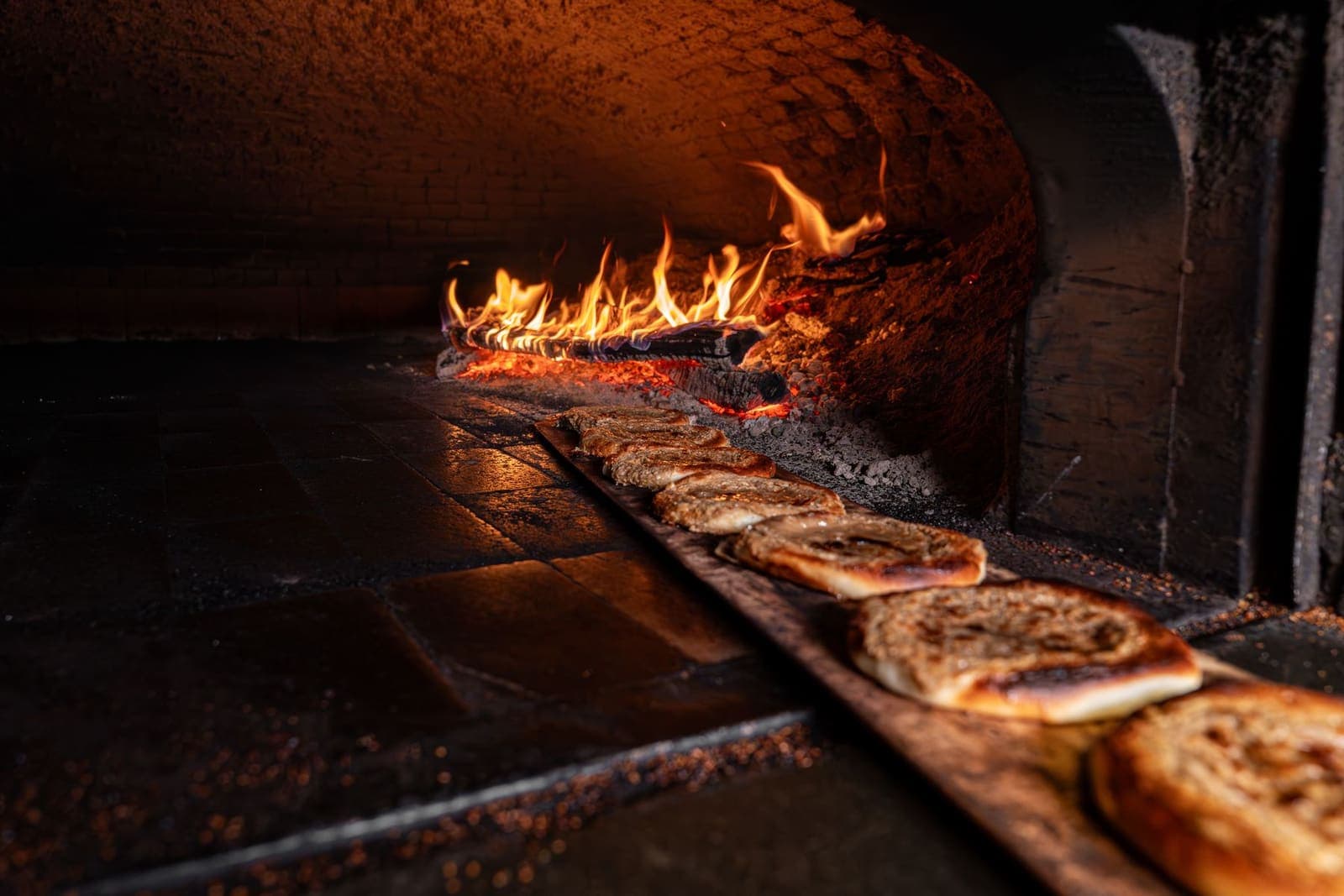
The fire is lit at four. There is a half hour when the shop belongs to the oven alone — clay ticking as it warms, smoke finding the chimney, the first light not yet in the lane. Dough that proved overnight is turned out and divided by hand; no scale, only the eye, and the eye is never wrong by much. The first czot goes down the wall at first light and comes up blistered a minute later. By six the baskets start arriving — customers bring their own, and each goes home with bread still too hot to hold. Mid-morning is for kulcha and bakarkhani, the low fire, the lid on. Afternoons are for the tins: weighed, packed, tied, and set in rows by the door, each with a name on it. By evening the oven is banked, and tomorrow is already rising in the proving room.